
Navigation
SEARCH BOX - USE KEY WORDS, NAMES, OR PHRASES.

866-391-6593

Call For Quote

or Click Link!

  •   Build Your Brand
  •       with KLAS!
CODAmeds®

CODAmeds® Dispensers

Manage pills & supplements


Entries in FDR Policies (5)

Monday
Sep242018

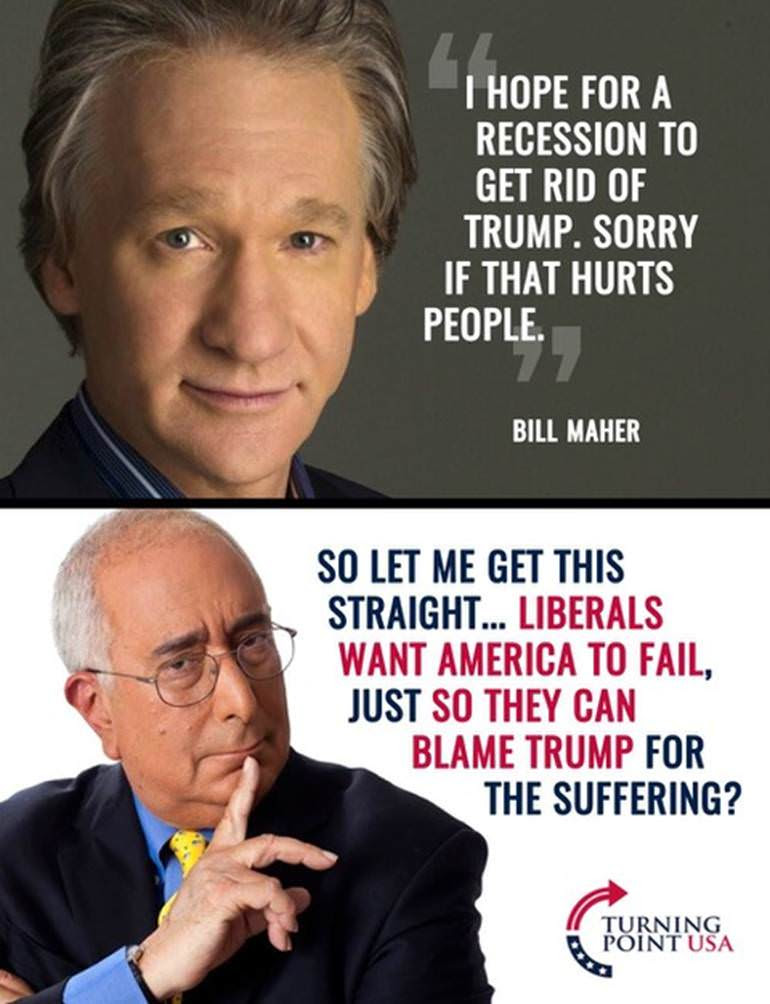
Trump Economy Naysayers Lesson


Reading Instructions: 

  • Put Down the iPhones
  • Know a 10 Sec. News Sound Byte is not all the Facts
  • Read actual Historical Facts on Record
  • Learn how to discover the Real Facts for yourself 

Fully understand what President Trump is accomplishing by comparing today's real facts to historial facts from 1843 to 2018 - You be the Judge... Enjoy this article, a real US History lesson!


To Every Thing There Is a Season,                                               But Your Portfolio Shouldn’t Turn                                                   

By: Jason Zweig, Wall Street Journal

Sept. 21, 2018

Every year, as the end of summer approaches, monarch butterflies head for Mexico, birds migrate south for the winter, and financial pundits predict that the stock market is about to crash.

Is the longstanding popular belief that September and October are the worst months for stocks valid?     Yes and no—mostly no.

Yes, some of the worst days in Wall Street’s history have hit during September and October - But that’s no reason to panic.

• On Sept. 24, 1869, the original Black Friday, the price of gold collapsed roughly 20% and took the stock market down with it.

• On Sept. 18, 1873, the investment bank Jay Cooke & Co. suspended payments, setting off a series of bank failures that triggered one of the worst depressions in U.S. history.

•  On Oct. 16, 1907, a busted speculation in copper led to a run on some of New York’s biggest banks, sparking a panic that ended only when J.P. Morgan personally intervened—ultimately leading to the creation of the Federal Reserve.

• On Oct. 28, 1929, “Black Monday,” the Dow Jones Industrial Average lost 12.8% in the crash that set the stage for the Great Depression.

•  On Oct. 19, 1987, the Dow fell 22.6%, the worst daily loss in its history.

• On Sept. 15, 2008, Lehman Brothers failed, ushering in the darkest days of the global financial crisis.

Is this destiny, or just random variation?

According to William Schwert, a finance professor at the University of Rochester who studies the history of asset prices, September does have the lowest average return of any month. From 1834 (the earliest date for broad market data) through 2018, September is the only month whose average return is negative -- at minus 0.4%.

Why Do You Think They Call It 'Fall'? The U.S. stock market has, on average, earned its lowest monthly returns in September. That might be a predictable result of less sunlight and colder weather–or it might just be a random fluctuation. Average returns on U.S. stocks between 1946–2018 by month. Source: G. William Schwert, University of Rochester

But the differences across months have been small, so you shouldn’t read much into September’s relatively poor historical average return, cautions Prof. Schwert.

Over the long run, December has the best average monthly return, at nearly 1.4%, with January close behind at 1.2%. The variations “don’t have much economic significance,” says Prof. Schwert.

As for October, its returns are positive on average, at 0.4% since 1834. Since 2002, October is the third-best month, with an average 1.6% return -- even though the S&P 500 lost nearly a fifth of its value in October 2008.

So investors’ fear of September and October is based less on evidence and more on what psychologists call “availability”—the human tendency to judge how likely an event is by how easily we can recall vivid examples of it. The horrific losses of October 2008 are hard to forget. The milder gains of 7% in October 2015 and 11% in October 2011 are hard to remember.

Investors might be more prone to worry this time of year, though. Researchers have found in numerous independent studies that as summer fades into fall, people’s behavior does turn with the leaves. As the hours of daylight dwindle, brain chemistry can change, reshaping how much risk some people are willing to take.

In his 1903 book,The ABC of Stock Speculation,” the financial chronicler Samuel Armstrong Nelson wrote: “Speculators are not disposed to trade as freely and confidently in wet and stormy weather as they are during the dry days when the sun is shining, and mankind cheerful and optimistic.” 

Investors trading options are more likely to expect losses in fall than in spring or winter. In the U.S., Canada and Australia, mutual-fund shareholders are all net sellers in their respective fall months, even though Australia’s autumn runs from March through May and it has a different tax year. 

Average returns on U.S. Treasuries appear to be higher in fall than in spring, suggesting that investors seek safety in the darker months. Stock analysts’ earnings forecasts are less optimistic in fall and winter than in spring and summer. 

Across more than 150 years of data, bidders at fine-art auctions paid more, on average, for paintings sold on longer, sunnier days than they did on shorter, darker days. Even players in the National Football League tend to be more aggressive in games played on hot days than on cool days. 

Of course, not all investing decisions are driven by psychology. Nowadays, people might tend to sell stocks in the fall in order to fund tuition payments coming due in September or to pay off credit-card debt they racked up on summer vacations. They might invest more in the first quarter of the year after pocketing year-end bonuses and tax refunds.

Still, “if bad news comes out in the fall, many investors may react more extremely than they might a few months later or earlier, when daylight is more plentiful,” says Lisa Kramer, a finance professor at the University of Toronto who has run several studies on how seasonal mood changes may affect financial behavior.

Although the stock market doesn’t always crash in the fall, you might well be more likely this time of year to treat smaller declines as harbingers of doom. Try, instead, to remember that the darkest months of the year often have the brightest returns.

Write to Jason Zweig at intelligentinvestor@wsj.com 
Thursday
Nov212013

Obama Bernays Sauce Spices Up His Bland Dishes

The Snoopy Dance

Although tempting as it has been to get up and do a celebratory 'Snoopy Dance' as Obamacare is falling apart, grandstanding and self-congratulatory backslapping at the moment will not help to settle our nation's healthcare problems.  I do offer, though, a hearty congratulations to the American public for finally waking up to this so wrong-headed liberal progressive social engineering in a Federal government healthcare program that robs the treasury and usurps our Constitutional rights.

The Obama White House now continues its downhill slide politically and substantively as the President's bandwagon wheels are falling off while the Democrat Party is jumping off to distance itself from Obama's mounting self-inflicted disasters. As more revelations unfold daily to many supporters about Obamacare, it now appears that it's a disparate Presidential vanity act to help build the Obama Administration's historical legacy contrary to mainstream narratives needs more political advertising hype.

Now the Washington D.C. propaganda machine has been turned up full blast to blow smoke and gas to obfuscate the truth and distort the facts using techniques from Edward Bernays, 1891-1995, a liberal progressive; whose uncle, ironically, was the renowned psychologist, Dr. Sigmund Freud. Bernays masterminded many successful advertising campaigns over the twentieth century. They ranged from introducing 'bacon and eggs' breakfast, shaving with safety Gillette blade razors, women smoking cigarettes, using underarm deodorant, selling the public on President Woodrow Wilson's 'Efforts for Freedom' Program to enter WW1, drinking fluoridated water and as a cold war anti-communism fear tactic weapon shaping public policy opinion.

Joseph Paul Goebbels, the Nazi Propaganda Minister under Hitler, read Bernays' book, Propaganda, which he found very instructional in formulating his propaganda program. Goebbels said, "Not every item of news should be published. Rather must those who control news policies endeavor to make every item of news serve a certain purpose." "It is the absolute right of the state to supervise the formation of public opinion." Hmn... Looks like Obama has been reading the same text book!

Bernays' successful techniques are still being applied today in the government manipulation of propaganda programs to control the 'mass mind' of the public. It's like a tasty 'bearnaise' sauce as a cover up or added flavor to make any dish easy to swallow, just like 'Bernays' propaganda campaigns.


Time: 02:53 

Saturday
Aug312013

Obama wants Nihilism - It means nothing to me!

"No other occupant of the White House can it be said that he owed his understanding of the political process to a man and a philosophy so outside the American mainstream, or so explicitly dedicated to opposing it. The following provides an analysis of the political manual that Saul Alinsky wrote, which outlines his method for advancing radical agendas. The manual was originally titled “Rules for Revolution” which is an accurate description of its content. Later, Alinsky changed the title to "Rules for Radicals."

"Some may want to reconsider what Obama may have really meant on election eve 2008 when he told his followers: “We are five days away from fundamentally transforming the United States of America."

“Nihilism” comes from the Latin nihil, or nothing, which means not anything, that which does not exist. It appears in the verb “annihilate,” meaning to bring to nothing, to destroy completely.

Nihilism is also the belief that all values are baseless and that nothing can be known or communicated. It is often associated with extreme pessimism and a radical skepticism that condemns existence. A true nihilist would believe in nothing, have no loyalties, and no purpose other than, perhaps, an impulse to destroy.  - and so how does an Alinsky radical's "political nihilism" affect our "American Way of Life"?

"The Alinsky radical has a single principle - to take power from the "Haves" and giveSaul Alinsky it to the "Have-nots". What this amounts to in practice is a "political nihilism" - a destructive assault on the established order in the name of the “people” (who, in the fashion common to dictators, are designated as such by the revolutionary elite). This is the classic revolutionary formula in which the goal is power for the political vanguard who get to feel good about themselves in the process."

"Unlike the Communists who identified their goal as a Soviet state - and thereby generated opposition to their schemes - Alinsky and his followers organize their power bases without naming the end game, without declaring a specific future they want to achieve - socialism, communism, a dictatorship of the proletariat, or anarchy. Without committing themselves to concrete principles or a specific future, they organize exclusively to build a power base which they can use to destroy the existing society and its economic system."

"By refusing to commit to principles or to identify their goal, they have been able to organize a coalition of all the elements of the left who were previously divided by disagreements over means and ends." This particular strategy has worked well under Obama to engage other supporters outside his circle. A major complaint is that Obama never offers detailed plans or reasons as he goes forward in his administration. So, without naming his end game, whether it be the Federal Budget Plans, Spending Programs or Presidential policies Obama avoids Congresswoman Nancy Pelosiconfrontational opposition and division overall to build support for his ultimate goals. I believe Nancy Pelosi said it best, "We have to pass the Bill so that you can find out what is in it." - so just don't ask for any details to avoid opposition or division ...Sound familiar?

Tuesday
Jul302013

The Obama 1964 LBJ War on Poverty Program

“Everyone is entitled to their own opinion,. but not their own facts.” ~ Senator (D-NY) Daniel Patrick Moynihan. The recent Trayvon Martin incident begged the question about where does racial profiling come from? The "facts" below answer that question. 

After fifty years, the 1964 "War on Poverty" is a $15 trillion national disgrace.   

It was to restore equality in education, jobs, housing and fiscal opportunities to the poor, especially to blacks. The new numbers from the 2012 Census Bureau report still shows no change since 1964 of the 15% of Americans living in poverty – and a clear sign that we are still doing something wrong.

Obama with tear stained cheek.Why is Obama still crying about income redistribution and whining that "poor blacks" are still left behind? He is complaining like nothing has been done on the Federal level to "right the wrongs" to those former slaves (Freed by the 13th Constitutional Amendment in 1865) as if in 2013, 150 years later, all the whites were still slave owners standing on their shoulders to keep them down. People should look at this phony "race hustle" to call out this "race card" charlatan - it's been getting really tiresome hearing this "black president" squawk about no chances to get ahead while elected by the voters into in the highest office in the United States and the world in 2013.

Heard any of Obama's 2013 strategies about: How to be dealing with the 73% out-of-wedlock black children birth rates leading to fatherless families like Treyvon Martin? Or what was Treyvon's mother thinking of to have more children with still another man out-of-wedlock too? Or why had Trayvon been suspended multiple times out of school, taken drugs, ran with gangs, sold dope and had gold teeth and tattoos? Or why Trayvon's mother gave up on Trayvon's drugs, friends and lifestyle to push him out the door for his father to then handle? Or how come Treyvon's own father shacked up with his girlfriend and why he had no job either?  

Source: US Department of Health and Human Services, U.S. Department of Commerce, CATO Institute.

Welfare is the organized public or private social services for the assistance of disadvantaged groups. Aid could include general Welfare payments, health care through Medicaid, food stamps, special payments for pregnant women and young mothers, and federal and state housing benefits. The Welfare system in the United States began in the 1930s, during the Great Depression. Opponents of Welfare argue that it affects work incentives.


Date Verified: 10.15.2012

Welfare Statistics
Total number of Americans on welfare 4,300,000
Total number of Americans on food stamps 46,700,000
Total number of Americans on unemployment insurance 5,600,000
Percent of the US population on welfare 4.1 %
Total government spending on welfare annually (not including food stamps or unemployment) $131.9 billion
Welfare Demographics  
Percent of recipients who are white 38.8 %
Percent of recipients who are black 39.8 %
Percent of recipients who are Hispanic 15.7 %
Percent of recipients who are Asian 2.4 %
Percent of recipients who are Other 3.3 %


Factoid:  The federal government currently operates 122 different anti-poverty programs, ranging from Medicaid to the tiny Even Start Program for Indian Tribes and Tribal Organizations. All together, the federal government spent more than $591 billion in 2009 on means-tested or anti-poverty programs, and will undoubtedly spend even more this year. That amounts to $14,849 for every poor man, woman and child in America. Given that the poverty line is just $10,830, we could have mailed every poor person in America a check big enough to lift them out of poverty – and still saved money. 

In 2012 the total U.S. population was 313,314,000. Per capita, the largest percent in a group of welfare recipients is black, over 51%, compared to fewer than 8% of whites. There are 50 million people on welfare and food stamps. Approximately 40% black, 40% white and the 20% remainder "others". This translates to 20 million blacks and 20 million whites on welfare. Those who identified as African American made up 12.8% of the U.S., 39 million people. Twenty million are on welfare and one million are in prison. There are 245 million whites who made up 77.9% of the US, 20 million are on welfare and one million in prison. Conversely then, there are 2.5% of all "blacks" verses .004% of all "whites" in prison with all "others" for a total of 2.3 million incarcerated prisoners population.

In 2013 the NAACP states that prison has not been proven as a rehabilitation for behavior, as two-thirds of prisoners will reoffend. That in itself offers more support for seeking significantly longer sentencing guidelines for incarceration on second and third offenses. It further rejects any remote suggestions that prison is rehabilitation, not to be confused with judicial punishment that removes from society individuals who will repeatedly commit crimes. 

From 1980 to 2008, the number of people incarcerated in America quadrupled-from roughly 500,000 to 2.3 million people. As of 2008,  prisons and jails consume a growing portion of the nearly $200 billion we spend annually on public safety with $70 billion dollars spent on corrections yearly. The 2013 Gross Domestic Product is $16 trillion, so $200 billion is only 1.25% of GDP. This amount, compared to our national debt is insignificant compared to the overall societal confidence in public safety over releasing these recalcitrants back into the general populations.

Doing crime just leads to more shit!American society today does not support children's religious beliefs, morals, displays or practices in any public schools. Relying on social media, cable and internet interactions many children development is distorted wanting for parental relationships.  The family and home life teach children these set of values, but many do not have that anchor and with no moral standards will break laws. Out of 314 million people, 2.3 million convicts is only .0073% of the total population. 2/3 are repeat-offenders, so 1.5 million convicts are reimprisoned "throw-aways" which leaves 800 thousand prisoners freed. 

"Perhaps its time to focus less on making poverty comfortable, and more on creating the prosperity that will get people out of poverty. That means that if we wish to fight poverty, we must end those government policies — high taxes and regulatory excess — that inhibit growth and job creation." The spotlight can then turn inward to the individuals' own resources, not to the politically corrupt politicians doling out government largess to pander for voters. We need to start another "War on Poverty" by starting a war on self-entitlement programs and school illiteracy; otherwise, we surrender now to racial profiling and save those trillions of dollars to build more prisons.

Thursday
Jun272013

Inflation - "It's deja vu all over again!"

A Short History Lesson by FDR

President Franklin Delano Roosevelt - (1933-45), pushed his major legislation package and issued a proliferation of executive orders that instituted the New Deal with a variety of programs designed to produce relief (government jobs for the unemployed), spur recovery (economic growth), and reform (through regulation of Wall Street, the banks and transportation). Unemployment fell dramatically in his first term, from 25% when he took office to 14.3% in 1937 and then it increased to 19.0% in 1938. So why did the economy improve so rapidly from 1933 to 1937, but then relapse into a deep recession?

A Shorter History Lesson by Obama

Hate to say it, but if you don't look into the past, history has a strange way of repeating itself! Or as the NY Yankee's catcher, Yogi Berra, said, "It's deja vu all over again!" ...Hello Obama, why aren't you looking back?  These lessons learned are useful and in the case of this President of the United States, the people will suffer. The sad truth is that it's because of Obama's history lesson lapses. 

 "Running by the Seat of your Pants" by FDR

These actual events and facts drawn from "Lords of Finance" (see our Rovalocity web site library) on pages 471-475 show a lesson learned, but not remembered or revisited today by the current Obama administration. This monetary manipulation is going on today BIG TIME as you read this history lesson.

"By October 1933, though the dollar had fallen by more than 30 percent, commodity prices began to sink again and the economy started to stall once more.  Roosevelt decided that it was time for a new initiative. Roosevelt's former Harvard professor, George Warren, recommended that the government give the dollar another nudge downward by itself buying gold in the open market."

First FDR Fireside Chat - March 23, 1933. "On October 22, in a Fireside Chat, FDR expressed that the U.S. dollar was too greatly influenced by internal policies of other nations and by political disturbances. Therefore, the U.S. must take control in its own hands the gold value of the dollar. This was a masterpiece of obfuscation." FDR was disingenuously blaming foreign governments and the current world-wide political unrest for the poor performance of the  American economy to mask the real problems due to FDR Administration monetary policy failures.

"So, the following day the U.S. began to buy gold."  It was a massive manipulation of the world gold prices in order to stimulate the U.S. economy with cheaper goods to sell to the world markets. Instead, it produced even further erosion of public confidence in the global financial markets.  It was a formula made for disaster! 

Today, it's even easier to devalue U.S. dollars by simply running more ink on paper through printing presses without any gold treasury deposits and instead only "backed by the full faith and credit of the U.S. government". 

Obama dumping excess US currency inflates the world currency markets causing a global-wide recession too.

Keynesian Economics

"Maynard Keynes was among few economists to applaud Roosevelt's decision to devalue the dollar.  In an article in the Daily Mail headlined "President Roosevelt is Magnificently Right," he hailed the message as an invitation to "explore new paths" and "to achieve something better than the miserable confusion and unutterable waste of opportunity in which an obstinate adherence to ancient rules of thumb has engulfed us." This was saying to throw the gold market prices to the wind to create arbitrarily set price. John Maynard Keyes - 62 (1883-1946) He and Obama would've no doubt liked each others standards for the Federal Government which benefited more spending programs.

Keynes is the economist that Liberals love and Conservatives hate. Keynes best known for his proposal that when national economies suffer a downturn, governments should borrow and spend money to boost economic activity. Part of the proceeds of the resulting economic growth should then be used to repay the debt. Obama loves "Keynesian Monetary Policies" as it demands more "Stimulus Spending" to expand by printing more money leading to theoretically paying for more government goods and services.  Just one problem, "Inflation", too much money supply around, devalues buying power and the ability to pay back debt and creates even more "National Debt" on the books ...Big Oops!

"The Gold fix is in" - "The Yolks on the Folks!"

In the following weeks, "every morning at nine o'clock, Henry Morgenthau, Secretary of Treasury, Jesse Jones, head of the Reconstruction Finance Corp, and George Warren, a Cornell economic advisor, would meet witGold Barsh FDR over his breakfast of soft-boiled eggs to determine the price of gold for that day.  They originally began at $31.65 an ounce.  The next morning this increased to $31.71, then $31.76 and $31.82."

"No one had a clue how they went about setting the price, although everyone presumed that some subtle analysis of the world bullion and foreign exchange markets went into their calculations.  In fact, the choice of price was completely random.  All they were trying to do was push the price a  little higher than the day before.  The exercise brought out the juvenile in Roosevelt.  One day he picked an increase of 21 cents, and when asked why, replied that it was a lucky number, three times seven." And, this is who Obama says he wants to emulate? - I can definitely see why!

Ten More Years to Get Ahead - 1935 to 1945

"Again, many of Roosevelt's measures to boost prices or wages by government fiat raised the cost of hiring workers and hampered recovery.  Because the contraction had gone so deep, it still took ten years for the economy to regain its old trend."  It appears that it finally took a WW2 economy, not FDR's policies, to kick-start jobs and the manufacturing sector creating economic growth.  FDR, very sickly, died finally in 1945. FDR was three terms too long.  Obama is already one term too long, so thank God for term limits as he finishes his final term in office.

"While the rebound was powered by an abundance of money at low interest rates, the Fed found itself ejected from the driver's seat.  Having made such a mess during the collapse, it had lost whatever prestige it once possessed." That sure sounds like what has happened today ...It's deja vu all over again!

Are we doomed to repeat this sad History all over again under Obama?

 ~ VOTE Change in 2016! ~